Now welcoming new clients in Melbourne & Nationally via Telehealth  ·  Book a free call →

International Day of People With Disability

By Liel Bridgford [4 min read]

On December 3rd 2024 I spoke in front of an awaiting audience my favourite topic – mental health of people with disability. It was the perfect way to celebrate International Day of People With Disability. 

This was my first Key Note speech and the welcome I received from the hosts at St John of God Accord was phenomenal. 

Here is a summary of my speech: 

“I was an angry child. I was in my late twenties when I finally made the connection between being an unheard disabled kid and my persistent anger. 

We get told by the society we live in, that we cannot possibly be well if we’re disabled.

But disabled people experience discrimination in our daily life and this of course impacts our quality of life and mental health.

Mental ill health is not our destiny. We often have poorer mental health because we live in a world that isn’t built for us. 

The question that needs answering is not how can we live well with disability but how can we live well in an ableist world? 


If we want to improve the lives and mental wellbeing of disabled people we need to change the world. 

By the world I mean the society we live in, to become equitable and safe for every body and every mind. 


But, while we are working towards changing the world, we also need individual support – so that we each live well in a world that isn’t built for us.

So how do we thrive with our mental wellbeing in this world? There are three pillars I’m suggesting we focus on. 

The first pillar is formal support. 

This support can include health, community and other professionals, and it needs to focus on removing barriers to participate equitably in society and thrive. 

The support should aim to increase our quality of life – not focussing solely on our limitations, but consider our personal goals, dreams, aspirations and our strengths. 

The second pillar of living well and improving our mental health as disabled people is social connections. 

Finding our people can be hard. Sometimes even being around others is difficult, and the spaces people spend time in are often inaccessible. 

When I was growing up, I did have friends. But there was so much all my friends did that I couldn’t do. And it left me feeling like an outsider.

I believe that we need social connections both within and outside the disability community. When we pretend like we don’t belong to the disability community, we are feeding into our internalised stigma. We also miss out on opportunities to learn, to laugh, to heal. 

I often hear in my practice: ‘People don’t get it’.

This is where the third pillar for mental wellbeing comes in – engage better. 

This pillar helps us build and sustain the first two pillars and our mental wellbeing overall. Engaging better is about improving our skills that lift our wellbeing.

I’m going to tell you about the skills I believe are most important, which is why I called them the building blocks of the third pillar. 

Asking for help is the first building block of engaging better.

As disabled people, we need to ask for help so much more because we live in a society that doesn’t automatically accommodate our needs.

The second building block of engaging better is communication.Not only we may struggle with communication because of our disability experience, but as disabled people we need to have better communication skills than non-disabled people. 

Our third building block for engaging better is acceptance. It’s about learning how to be uncomfortable, and at the same time, be ok.

The fourth building block is managing disability tax. We need to manage and address disability tax to make sure we minimise it as much as possible, manage our time the best we can, and get the supports we need to ensure we still have space for meaning and purpose.

The fifth building block of engaging better, which is my favourite, is meaning and purpose. To optimise our mental health we want to experience joy, self confidence and positive emotions. [2] We need to do things that matter to us, to behave in a way that makes us feel proud. 

The next building block in the engage better pillar is self compassion. To best live through all of these external and internal challenges, and look after our mental wellbeing, we need self-compassion.

The final building block we need to mention, and I’m going to put it at the very bottom of the pillar, because without it, we can really struggle with all of those skills. 

A crucial building block in engaging better to improve our mental wellbeing, is understanding and managing our internalised ableism. 

Internalised ableism is the common denominator that gets in our way to practice all of these! Without managing this, you can see how the pillar kind of falls down. 

Internalised ableism is the collection of the thoughts, feelings, and behaviours that are rooted in the discrimination and prejudice against disabled people.


When we learn to recognise, name, and manage our own unique collection, it makes it possible to be more compassionate towards ourselves, more accepting, to find meaning and overall engage better. “

There was more to this speech, which if you’re interested you can listen and watch here

What I particularly enjoyed was connecting with fellow disabled people and the people who support them. 

Thank you again to St John of God Accord for having me, and to Nillumbik Shire Council for the grant making this event possible. 

Until the next IDPWD, let’s all find small moments of celebrating disability pride. 

Liel Bridgford

Psychologist, Writer, Educator 

Kultivate Founder and Director
Speaking up – A 2024 Wrap Up

By Liel Bridgford [2 min read]

Speaking up is not always easy, while it is always a privilege.

Last year was a busy one, and some of my favourite moments happened while speaking about my passions: disability rights, accessibility, mental health, disability justice and more.

Below are some of those highlights.

In March I interviewed Hannah Diviney about her memoir. Connecting with the audience was best part about that event – hearing the impact of our words on others is always special.

On the podcasting front, I was recently interviewed on the podcast Disability Disrupters – a New Zealand based podcast about disrupting the status quo in disability. It was a pleasure to speak with Pam, and connect over our shared experience of working in the health sector. Pam asked interesting questions, and my favorite was what would I change in the disability sector.

On the radio front, I spoke with ABC about gossip and imposter syndrome, both were short and sweet interviews. I particularly enjoyed talking about imposter syndrome in light of the imposter syndrome workshop I facilitated through Writers Victoria. Facilitating that workshop was definitely a highlight from the year, as I combined my passions for mental health and writing.

Another highlight of 2024 was speaking with Jasper Peach on Able radio, when I got to talk about the importance of mental health support for disabled people and how to find the right support for you.

On a cool June evening a group of writers gathered at Doncaster library and I facilitated workshop about managing ableism, internalised ableism and writing consistency. It was a beautiful evening of connection, thinking and redefining meaning.

When I arrived at the Channel 31 studio for my interview with ALL IN I have to admit that I felt a little nervous. The experience was wonderful and as I moved away from the studio after speaking about mental health, disability justice and immigration, I felt a huge sense of pride.

In December to celebrate International Day of People With Disability and finish off the year, I had the great privilege of delivering my first keynote speech at St John of God Accord.

There have also been many other moments of speaking up and advocating this year- from social media, to my kids school, to professional meetings and everything in between.

It is with great hope that I conclude speaking up for 2024. I hope our words reach someone who needs to hear them.

Liel Bridgford

Psychologist, Writer, Educator 

Kultivate Founder and Director
Empathy during an election campaign

By Liel Bridgford [3 min read] – the following piece was first published by Powerd Media.

There is a lot missing from this election campaign, but none more important than empathy.

You want an effective leader who will do something about the issues you care about. Whether it’s cost of living, family violence, disability or mental health, in order for our leaders to take effective action, they need to have the willingness to listen and understand others’ point of view.

Our leaders rarely live through our daily struggles of navigating public transport, or disability support services. To properly fund and direct these essential social structures, they must be able to understand what you are going through.

Even if you don’t need such services now, sooner or later government policies will affect your life – in retirement, when falling ill or starting out a business. If you want social systems to work for you when you need them most, we need empathetic leaders.

Regardless of a representative’s own background or where they position themselves on the political spectrum, they must be able to think outside of their own personal experiences. No non-disabled person will ever fully understand what it’s like to navigate the world when it’s not made for you, but they can try.

As a disabled migrant, when I heard Peter Dutton’s comments about immigration, I could tell he has not listened to the immigrant and refugee communities.

A leader who talks about your priorities but lacks willingness to listen to experiences outside of their own, is unlikely to be an effective leader.

An empathetic leader is more likely to be motivated by the greater good. They are more likely to promote policies based on what people need, because empathy is a motivating emotion. Importantly, empathy improves the effectiveness of leaders.

Empathy will also allow our society to thrive by improving life for our disadvantaged. An empathetic leader who works to meet the needs of our marginalised people, will help our entire society to thrive.

When people’s needs are met, they are far more likely to be a part of our community. Conversely, when people struggle, they are more likely to behave in an antisocial manner. When people are excluded, discriminated against and disenfranchised, they are far more likely to become antisocial, which of course hurts all of us.

Empathy in our voting, and in our leaders, will create a better society for us all. While my communities are often under attack in this campaign, I hold onto the hope that we all have capacity for empathy.

“When I cast my vote, I will be thinking of our leaders’ empathy, and I hope you will too.”

Liel Bridgford

Psychologist | Writer | Educator

Kultivate Founder & Director

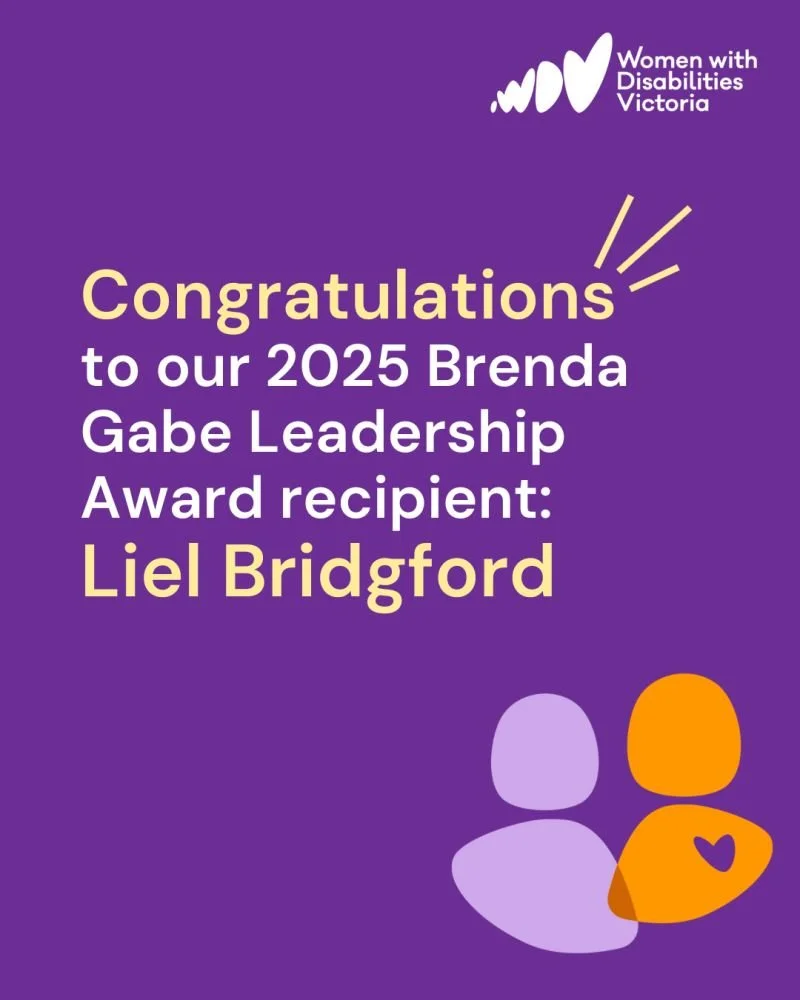
2025 Brenda Gabe Leadership Award

By Liel Bridgford [2 minutes read]

“When I was a kid, my time in the health system was filled with trauma. 

My mission is to change the way we do healthcare – so that disabled people have the power and access they deserve and need to have the best healthcare and life.”

This was the start of my acceptance speech of the Brenda Gabe Leadership Award on Tuesday 27 May 2025.

WDV said “Liel has been improving the lives of women and gender diverse people with disability as a proud disabled psychologist, and by establishing a disability-specific psychological practice. Liel continues to improve access and acceptance of disabled women in mental healthcare through advocacy, education, writing, podcasting, interviews and social media presence.”

I continued, speaking to the crowd of the Members event of Women with Disabilities Victoria (WDV):

“This award is a proof that we can do it.

There are still many barriers, violence and even abuse of disabled women and gender diverse people in our healthcare system and I aim to be a small part of the wave of change to make the healthcare system safe and accessible for all. 

Being here today reminds me of the power of our community to make sure disabled girls, women and gender diverse people are not left behind.  

Thank you to WDV and the disability community that I am so proud to be a part of. I feel so honoured and privileged to have this opportunity. 

I want to acknowledge my fellow nominees, all of whom do incredible work to make our lives better.”

My commitment to re-creating the healthcare system has started when I was a kid, and winning this award fills me with hopes, and fuels my dream of a safer, more accessible future for us all.

Liel Bridgford

Psychologist | Writer | Educator

Kultivate Founder & Director

Energy Management when Fatigue is a Regular Visitor

The Barriers to Manage Fatigue 

There are endless barriers that can get in the way of managing our fatigue, but many fit into one of the following categories: 

  • Fatigue itself! The constant experience of being fatigued can get in the way of implementing any change in our life. 
  • Not enough supportive people who can help encourage us along the way
  • Competing demands on our time and energy 
  • Financial barriers or need to work more than is sustainable 
  • Past experiences of trying to address fatigue that have been unsuccessful 
  • Thoughts and feelings that everything is ‘too much’ or that changes are not ‘worth it’ for the effort
  • Difficulty tolerating the discomfort of changing our routine 

Where to start  

To manage your energy and fatigue most effectively, it is important to start with the following: 

  1. Identify the contributing factors to your fatigue.Whether it’s a symptom, competing demands, poor sleep quality, or weather, identifying what adds to your fatigue is useful. 
  2. Get to know your fatigue and energy patterns. This includes learning which activities spend the most energy for you, and which recharge your batteries. It can also involve understanding the impact of weather, noise, and stress on your fatigue. Start by tracking your energy levels and activities for a week. 
  3. Identify your barriers to addressing fatigue. Using the list above as a guide, write down what you have tried before, what worked or didn’t, and what would help you improve your fatigue management. It can be useful to ask yourself something like ‘If I had all the support I need, what would that look like?’ 

Implement Effective Strategies

There is no magic formula that will make your fatigue disappear, but there are strategies that can make a difference in the long term. 

After you have identified the contributing factors to your fatigue, understood your patterns of energy and fatigue, and wrote down your personal barriers, you are ready to implement the following strategies: 

  1. Identify a small, initial goal, and the barriers to achieving it. Your goal can be for instance to address one of the things that make your fatigue worse, and the barriers are the things that stand between you and achieving that goal now. Keep making your goals smaller and smaller until you feel very confident to be able to achieve it within a few days. 
  2. Use a pacing system that suits you. My personal favourites are the Spoons Theory and the traffic light system. The traffic light pacing system divides your activities into three categories according to the level of energy you spend doing them: high (Red), medium to neutral (Yellow), and restorative activities (Green). This allows you to balance your schedule according to your energy, thereby sustaining your energy for longer. Use our Traffic Light System tool to help you implement this in your life. 
  3. Optimise sleep hygiene – although many people experience fatigue even when sleeping well, sleep hygiene affects our sleep quality and quantity, which in turn impacts fatigue and energy management. Review your bedtime habits, and gradually improve your sleep routine as needed. Focus on one small change at a time, implementing it for a few days before introducing another. For example, start by removing your phone from the bedroom, then introduce a no-screen 30 minute gap before bed. Go to The sleep foundation for more.
  4. Simplify and reduce your load – although it sounds simple, this is one of the most effective, but often-missed strategies for energy management. Focus on finding tasks you can delegate or delete, as small as they may be. For instance, some people ask for help from loved ones with laundry, or with organising social events. Write down at least three activities from your schedule which can be either removed or given to someone else. Even delegating tasks such as cleaning the toilet to another person can have a big impact in the long term. 
  5. Review how things are going regularly, and adjust what isn’t working. 
  6. Reach out for more support when you need it. You can start by contacting a disability friendly Psychologist. 

Liel Bridgford


Psychologist | Writer | Educator

Kultivate Founder & Director

Thriving After an MS Diagnosis: Three Pillars to Support Your Wellbeing

By Liel Bridgford [2 min read]

First published on the REACH-MS website.

Receiving a new diagnosis of a condition like Multiple Sclerosis (MS) can be a life-defining moment. Feelings of anxiety, anger, shock and sadness are common.

When people see us after a new MS diagnosis, they often experience intense anxiety about the future, and confusion about how to accept the new version of themselves.

Working through a new diagnosis takes time, but also support and the right tools. To adjust well, it can be helpful to think about the following three pillars of thriving.

The first pillar is formal support which can include a nurse, a psychologist or an occupational therapist for example. This is about making sure you have the people and environments around you to thrive. Who do you have in your life who is helpful to living well, and who else might you need?

The second pillar is social connections, and can include pets, partners, friends, colleagues or neighbours for instance. Who do you feel connected to? Is there someone you can reach out to when things get hard?

The final pillar for thriving is engage better – which is about improving our skills that support our wellbeing. These skills include asking for help, communicating our needs and accepting our diagnosis or symptoms.

To engage better, it can be helpful to practice self-compassion and manage our internalised stigma. What does your mind tell you about your diagnosis? Is there something kinder you can add? A simple mantra such as ‘I’m good enough just as I am’ can be a starting point.

With access to connections, support and effective tools – many people thrive. Having MS or any neurological condition is not the end – it can be the start of greater self-care, acceptance and connection with community.

If you don’t know where to start – reach out to a trusted GP or a disability-friendly psychologist.

Liel Bridgford

Psychologist | Writer | Educator

Kultivate Founder & Director

Disability is Sexy, Not Shameful

By Liel Bridgford [4min read]

First published on Disability Rights and Culture Blog

In most of my memories of wanting, initiating or having sex as a young person, my disabled body played an important role.

I grew up as a disabled kid who was assigned female at birth. This meant that my thoughts about my leg being “abnormal”, “deformed” or “problematic” seeped into my body image, then my self-worth, then into how valuable I thought of myself in a romantic or sexual way.

As a teenager and young adult, I would often hide my leg, and be constantly on high alert to how people, especially boys, saw and perceived my leg.

The desperation to find a romantic and sexual partner I felt then lingered through my scarred bones for many years. For me, being desired sexually was a validation I desperately needed from the world around me. I craved feeling that I was enough, that I was ok, just as I was.

But this desperation was also complicated by intense fear and anxiety about people seeing my leg under the brace, watch me limp, or noticing my curled four toes.

In all my early sexual experiences I remember feeling equally exhilarated and afraid of being rejected for the parts of my body I could never change.

As many young women and gender diverse people, I have experienced countless sexual harassment, judgment and even abuse. Unlike non-disabled folks, my disability has multiple times left me more vulnerable to such abuse, for instance when a doctor examining my condition has abused me in his clinic, or when I could not quickly escape a harasser on my crutches.

From shame to pride

For me, developing my self-worth beyond my body has taken years. It has taken time and effort, as well as finding the right supports: a good psychologist, a loving and non-judgmental partner, friends, and a lively disability community.

I still vividly remember the moment my now-husband found out about my disability – and his response. He did not flinch or move away but kept our (admittedly flirty) conversation going. That was the moment I knew he was different from any other person I dated before.

In my late 20s I found answers online for questions I didn’t know I had. Coming across a group of people who share my physical disability has changed my relationship with my body so dramatically that for the first time in my life I felt “normal” – it was a sensation of relief, sadness and joy all mixed together.

One moment stands out in my journey when a fellow group member shared a photo of their leg, and it looked almost identical to mine. As a person without a fibula, four curled toes and endless overlapping scars on the shin from 18 operations – it was momentous. The simple picture brought shivers to my body and tears to my eyes — for the first time I was truly not alone.

With time and a lot of effort, I gradually shared my own story and body with the world. Connecting with many other disabled people and building a community of people who get it has allowed me to let go of the shame and build pride and confidence in myself.

It has not been an easy journey, but I am now open about my leg and rarely try to hide it. Feeling sexy and being disabled are not mutually exclusive. Having a body that is different does not make me less worthy of sexual attention, pleasure, and safety. In fact, being disabled has helped me feel empowered to be myself – in and out of the bedroom.

Sexuality and well-being for disabled people

Self-confidence in our disabled identity is crucial to our confidence with a potential or current sexual or romantic partner. And many of us disabled folks struggle with both.

Nowadays as a disabled psychologist, I get to have the privilege of supporting fellow disabled people to live well. Sex and romance is such an important part of our wellbeing, and so I was delighted to be invited to speak about sex, disability and chronic illness on the new SBS podcast series Love Without Limits.

I hope the episode – and this article – will help someone feel just a little more confident and empowered to be their sexy selves.

Tips for your romance and sex life when you’re disabled

My top tips for fellow disabled people:

  • Find your people – fellow disabled people you can talk to can help feel connected and desired
  • Communicate – work on communicating your needs and desires with family and friends and gradually build your ability to communicate with a partner about your sexual needs
  • Experiment – in whatever way is accessible to you, starting with self-exploration
  • Develop your confidence – in your disabled identity. Communicate about your disability to someone you trust, and practice advocating for yourself in different ways

If you are still having a hard time, I suggest reaching out to a disability-friendly support service such as a psychologist or sex therapist.

Liel Bridgford

Psychologist | Writer | Educator

Kultivate Founder & Director

Knowledge is Power

By Liel Bridgford [2 min read]

It took me nearly 30 years to find out that an Occupational Therapist is a profession that could be relevant to my life. Not only they can be relevant, but they can help improve my access to things and people I love, and even improve my quality of life.

Lack of collaboration between professionals, and the knowledge gatekeeping from clients is still a significant problem in the health system. That’s why at Kultivate I am determined to create something different. A practice, and a system where information is shared, where clients are the experts, and are given all the information and knowledge they need to thrive.

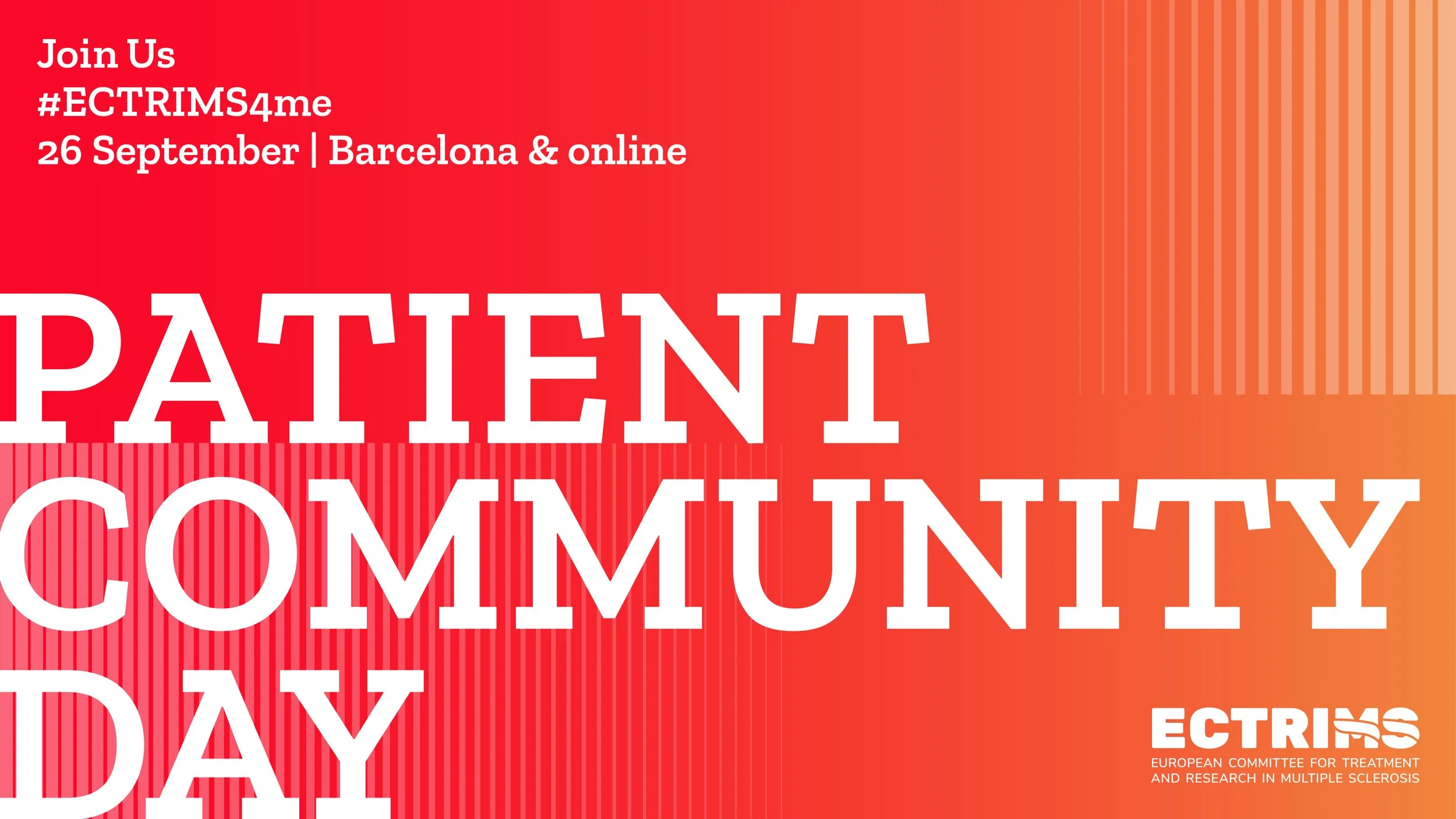
That is why we decided to support the 2025 ECTRIMS patient community day – to help more people with neurological conditions receive the information and support they need.

The event is happening on 26 September 2025 in Barcelona & online and is designed to bring the latest research about Multiple Sclerosis and related conditions to people living with them.

To register, visit: https://www.ectrimspatientcommunity.eu/registration

As we get closer to the date, we are thinking more about how to support the community and are hoping to host an event to watch and connect.

Would you want to get together to watch and connect with the community? In person in Melbourne or online? Let us know by emailing contact@kultivate.au.

a red and oragne tile with text reading 'join us #ECTRIMS4me 26 September, Barcelona &online. Ask the expert - patient community day. Ask the expert.ECTRIMS: European Committee for Treatment and Research in Multiple Sclerosis.
[ID: a red and oragne tile with text reading ‘join us #ECTRIMS4me 26 September, Barcelona &online. Ask the expert – patient community day. Ask the expert. ECTRIMS: European Committee for Treatment and Research in Multiple Sclerosis. ]


We are excited and proud to provide a little support to this fantastic event, created for clients with the sole aim of improving people’s lives.

Having knowledge gives us power – to make more informed decisions, to speak up, to access our community. A simple suggestion from my first Occupational Therapist to get a stool meant significantly less lifting and bending, less pain and even less fatigue.

No one should wait 30 years to receive the support that they need to thrive.

If anything that we learn in our journeys as professionals can help any other person, we want to share it. In fact, here at Kultivate we believe that education and collaboration is a crucial part of providing excellent support.

If there is something you want or need to know, or if the support you currently have isn’t working — know that things can improve. Learning from others, both professionals and peers, can be one of the ways to create the change you are after.

Liel Bridgford

Psychologist | Writer | Educator

Kultivate Founder & Director

Speaking Up Against Ableism

By Liel Bridgford [2 min read] – the following piece was first published by Powerd Media.

I get this nauseous, anxious feeling in my gut every time I speak up against ableism. Speaking up comes with a price, so we must sustain our efforts of disrupting the ableist status quo.

I use the five R’s of speaking up to help look after my physical, mental, emotional and social wellbeing, and hope you might find it useful.

1) Readiness – make sure you’re ready by understanding ableism and yourself better.

Research ableism to understand it better, and think about the spaces you may want to speak up at. Acknowledge that some of these may not be safe enough to do so.

Make sure you’re ready by understanding your own triggers and physical reactions. Get to know your physical, emotional and psychological reaction when noticing ableism.

Being ready also means regularly looking after our nervous system to facilitate our resilience and insight that enables us to speak up. This might include meditation, rest, or movement.

2) Reaction – when coming across ableism, curiously notice your reaction. Try noticing your feelings, thoughts, urges and memories before acting. Our bodies constantly give us information about what is important and safe for us.

Consider your emotional safety by checking your reaction. If you’re feeling annoyed and your mind is trying to come up with solutions, you might find it manageable to raise the issue. If you are feeling overwhelmed, or triggered into a fight, flight, freeze or appease response, seek safety and emotional regulation first. Try a simple breathing or grounding exercise before considering speaking up.

3) Receiver – considering the receiver is crucial when protecting our own wellbeing in the process of speaking up.

Think about the person, group or organisation that will be the receiver of your message to assess how safe it is for you to speak up.

Ask yourself about how well you know the person, how might they respond to being challenged, and which settings you are in.

Try to find allies in the room and if none exist, add this to your decision making. Speaking up without an ally around can be more emotionally and physically taxing than when support is available.

If you feel threatened in any way, seek safety first.

4) Recover – Whether we speak up or not, witnessing ableism is often uncomfortable, scary or even triggering. After the event or when it’s safe to take a break, take time to care for yourself.

Check in with yourself about your reaction and try to notice what you need. A small act of self-compassion can be the first step, such as sitting outside or a hot drink while listening to your favourite track.

5) Reach out – It is often useful to connect with others after witnessing ableism and speaking up.

Sharing the load of injustice can help us remain feeling connected and hopeful, which ultimately sustain us in our advocacy efforts.

Liel Bridgford

Psychologist | Writer | Educator

Kultivate Founder & Director

Ableism in the Health Sector

By Liel Bridgford [1 min read] – The following article was first published on Powerd Media on 27th February 2025:

I was furious when my friend lost her job because of mental health struggles, especially because we worked for an organisation dedicated to mental health support.

A few years later when I was the one who lost their job because of ableism, I was in shock. I thought working as a health professional would provide me with some support, or at least understanding.

Instead, I was bullied and pushed out of a job I was very good at, because of my mental health. Because of ableism.

Ableism, or the discrimination and prejudice against people with disability, is just as prolific in the health sector as it is elsewhere. I wrote about the devastating impacts of health ableism here.

In various workplaces I physically struggled as accessibility is still not prioritised across many healthcare settings, both private and public. One particular government-funded employer refused to provide accessible entry despite my advocacy efforts for an alternative to the staircase.

Such violations of our human rights create unsafe working spaces where disabled people are not able to enter, remain, or advocate for their needs. Many disabled people feel scared of talking about their experience of this for fear of being judged, excluded, or even losing their jobs. Most people who responded to my social media post about this have asked to speak anonymously.

Our healthcare system remains unjust, and ineffective. Disabled people struggle to get the healthcare they need, and in Australia disabled people have lower health outcomes than our non-disabled peers.

In order to dismantle health ableism we must bring more disabled people into this workforce, and ensure they can remain there.

As a disabled psychologist, I work not only to best support people with their suffering, but also to alleviate these through systemic change. I advocate for inclusion and anti-ableism work whenever I can. I shamelessly talk about my own disability experience with colleagues and the broader health sector.

Creating a health system that is equitable requires more of us. More disabled health professionals who can create workplaces we can flourish in, and services that provide equitable, client-centred, holistic care to our communities.

Disabled people deserve as good healthcare as anyone else. And we are best placed to shape the creation of the healthcare system we all want.

Liel Bridgford

Psychologist, Writer, Educator

Kultivate Founder and Director
Acknowledgement of Country

The Kultivate team acknowledges working and living on unceded Aboriginal land. We mainly work on the lands of the Wurundjeri Woi Wurrung and Boonwurrung people of the Kulin nation. We pay our respect to Aboriginal and Torres Strait Islander elders — past, present and emerging. We are committed to ongoing learning and working towards reconciliation and justice.